Introducing Market Insights: A New Suite of Private Market Signals

7 min read
.svg)

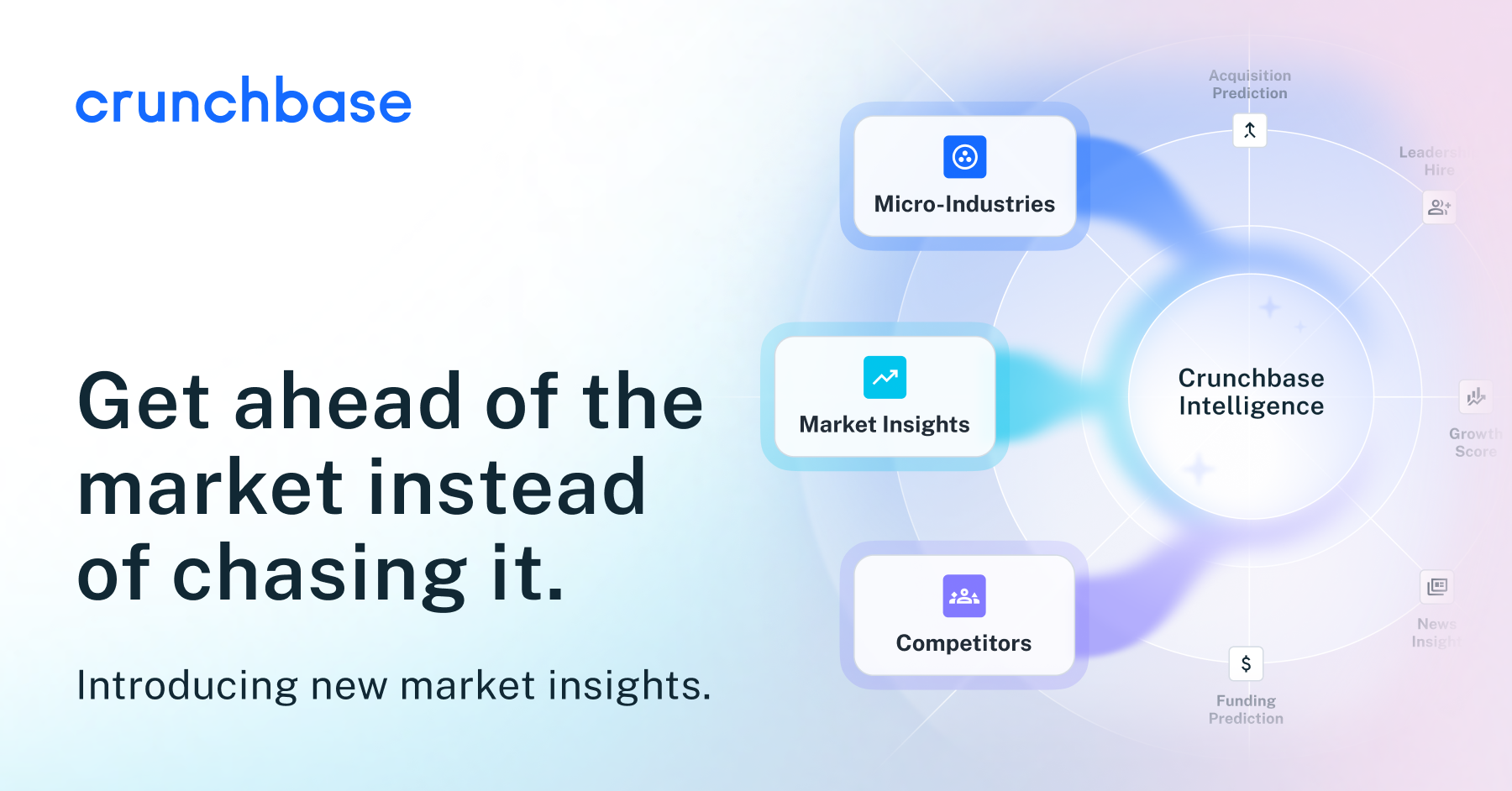
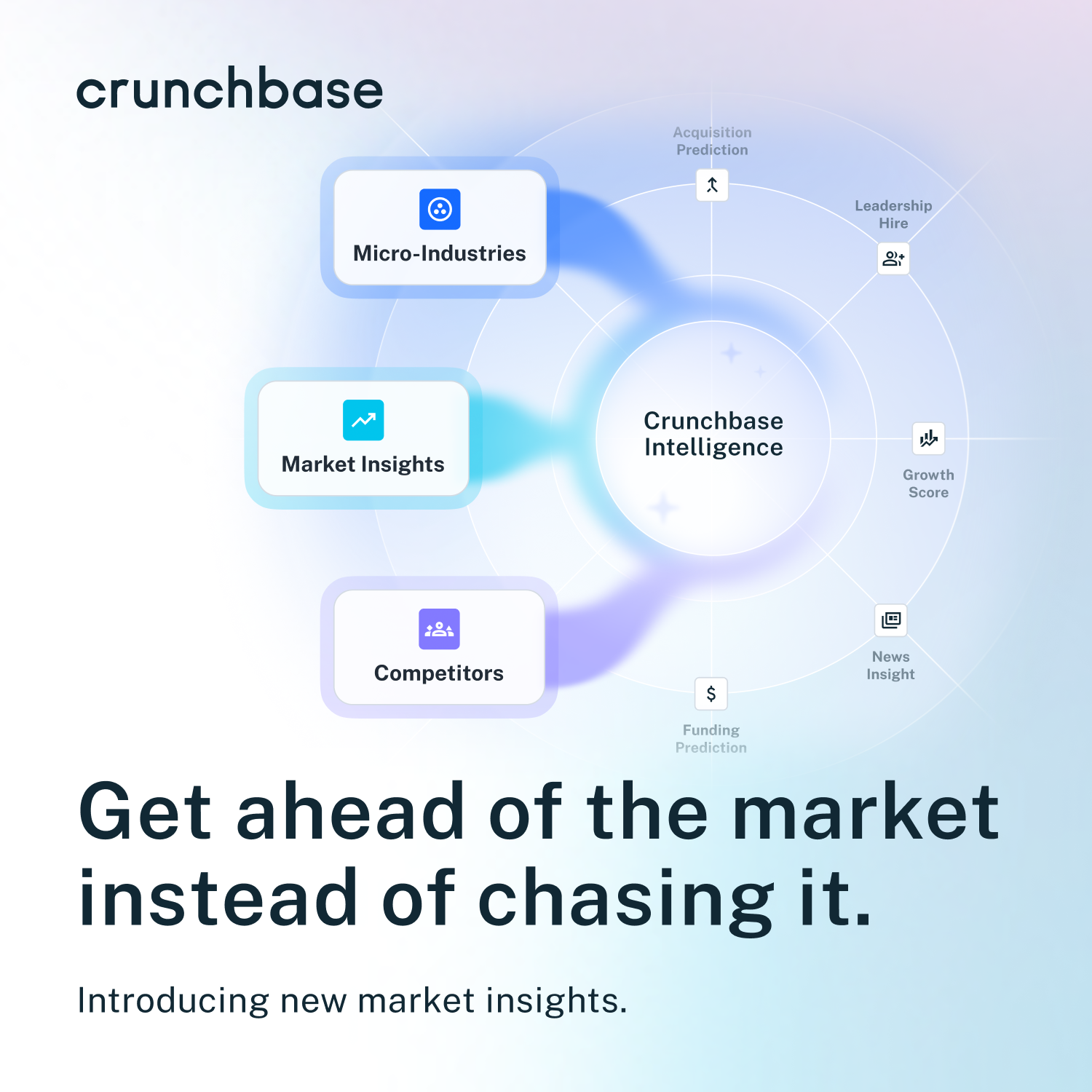
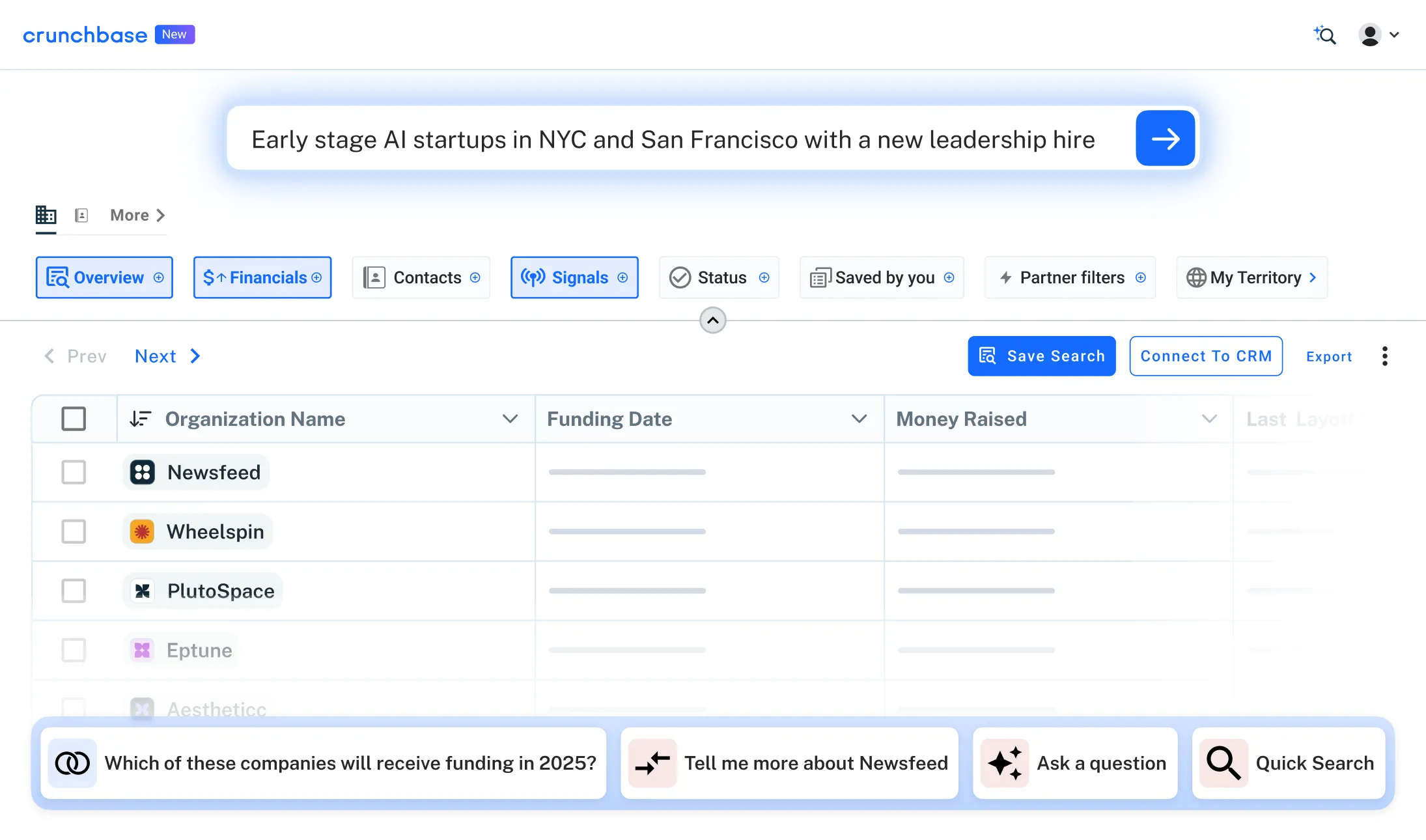
Crunchbase has long helped teams identify and evaluate companies across the private market — surfacing funding signals, anticipating company growth, and delivering predictions that help teams act on emerging opportunities first. As the next step in deepening our private market intelligence, we’re releasing market insights: a new suite of signals that goes beyond individual company data to give you a complete view of how private markets are structured, how competition forms within sectors, and where industry momentum is heading next.
"We built market insights to solve a core challenge we kept hearing from customers: understanding private markets is still too manual, fragmented, and reactive. Building on years of developing AI-powered predictions and proprietary market intelligence, this launch introduces a new suite of signals — micro-industries, explainable competitor intelligence, and Market Insights — to help teams identify emerging markets, understand competitive dynamics, and track market momentum without stitching fragmented signals together manually." — Monika Abraham, Staff Product Manager, Crunchbase
Traditional industry labels often lack the granularity needed to support high-stakes decisions. They don’t reflect how markets actually form, how companies specialize, or where competition is emerging.
Micro-industries are designed to close that gap. We’re introducing more than 5,100+ granular market segments that organize companies based on what they actually build, not what broad category they’ve been assigned to. The result is a segmentation layer precise enough to define an ICP, map whitespace, or identify emerging niche industries before they become widely recognized.
Micro-industries sit below our existing industry taxonomy and are generated using Crunchbase’s proprietary products and services data — a dataset that spans over 2.7 million private companies and 13.2 million mapped products. Our proprietary clustering system identifies how products naturally group together, followed by LLM-driven refinement that improves label quality, hierarchy consistency, and company-to-category assignment. Companies can belong to multiple micro-industries simultaneously, which mirrors the reality of how modern companies go to market.
As part of our market insights release, we’re also releasing stronger competitive data. This data flags a company’s top competition, ranks them, and assigns them each a competitive score.
Our proprietary model uses a hybrid architecture: a machine learning candidate generation model trained on products and services data, with a targeted LLM layer that refines the results — improving relevance, correcting ordering, and surfacing missing competitors. The updated model delivers 90% precision on each company’s top three competitors and 87% on the top five, with an overall competitor list accuracy of 88.7%.
Alongside the accuracy gains, we’re introducing plain-language explanations of why companies compete. This improvement stems directly from customer feedback that without context behind a competitive pairing, the data was hard to act on or defend internally. Our competitive reasoning surfaces product overlap, shared customer segments, and geographic context. This helps your team validate and act on the data without manual research and catch rising challengers before they show up in analyst reports or funding headlines.
Competitive reasoning is available in both Crunchbase Business and the API. Business users get full access to ranked competitor lists, competitive landscape maps, and search filter functionality. API customers accessing the Predictions and Insights package receive competitor scores alongside the full reasons output.
The third component of our release — the Market Insights signal — is a new, standardized indicator of whether a market segment is emerging, growing, or declining. Unlike lagging indicators like funding rounds and exits that confirm where a market was, the Market Insights signal gives you a clear view of where it’s heading next, eliminating the slow, manual work of stitching fragmented signals into an industry-level view yourself.
Each Market Insight aggregates multiple signals across companies within a micro-industry segment — changes in cluster composition, funding and exit activity, profile engagement, and broader macroeconomic context — and outputs a clear directional label with a supporting summary. Because these insights are built on our micro-industries data, you can look at a target account and immediately understand whether the niche market it operates in is gaining or losing momentum, without having to build that analysis yourself.
For investors and VC/PE firms, that means earlier conviction on where to place bets — before a market becomes consensus. For go-to-market teams, that means prioritizing pipeline in growing markets, and using early signals of market contraction as a warning system before churn shows up at renewal.
Crunchbase’s new suite of market insights reveals emerging niche categories, deep competitive context, and shifting momentum — so you can get ahead of the market instead of chasing it. The result is faster, higher-confidence decisions, whether you’re sizing a market, prioritizing outreach, or evaluating where to invest.
"Modern companies rarely fit neatly into a single category anymore, which makes traditional market intelligence increasingly limiting. New sectors form faster, competition shifts constantly, and traditional industry classifications cannot keep up. These market insights give teams a way to understand how markets are actually evolving in real time, so they can identify opportunities earlier and make decisions with far more precision." — Ketaki Rao, Chief Product Officer, Crunchbase
If you’re a current Crunchbase customer:
If you have questions about access or how these signals fit into your existing workflows, reach out to your account team.
Micro-industries are granular market groupings that organize companies into more precise segments than traditional industries. Compared to broad industry classifications, they better reflect how companies compete and cluster within modern markets.
Micro-industries are generated using Crunchbase's proprietary products and services data — spanning over 2.7 million private companies and 13.2 million mapped products — and AI-driven clustering that groups similar offerings into meaningful market segments. The result continuously evolves as company and product data changes.
Market Insights show whether a market is emerging, growing, or declining, so you can understand where markets are heading without manually analyzing lagging indicators like funding or news. Each Market Insight includes a directional label and percentage change, one or more contextual signals such as funding, exits, or engagement data, and a plain-language summary explaining what's driving the movement.
Market Insights are generated by combining multiple signals across companies into a single, standardized view of market momentum. This includes data such as micro-industry expansion and contraction, funding and exits, and aggregated user engagement data.
Yes. Crunchbase provides a ranked list of competitors for companies across the private market, powered by a hybrid machine learning and LLM model that evaluates competition based on product overlap, customer segments, geographic relevance, and strategic fit. Each competitor pairing includes a Competitor Score — a relative signal of competitive strength — and competitor reasoning, which explain why two companies compete across products, markets, and geographies. The model delivers 90% precision on the top three competitors, 87% on the top five, and 88.7% overall list accuracy based on human review. Competitor data is available in both the UI and API, with full access for Crunchbase Business users and API access via the Predictions and Insights package.
Crunchbase's competitor model identifies and ranks competitors based on how companies actually compete — not just who operates in the same broad industry. The model evaluates product and service overlap, shared customer use cases, geographic markets, and the strategic importance of each company's offerings. A targeted LLM layer then refines the results, improving relevance and ordering — particularly for a company's most critical competitive pairs. Every result is accompanied by competitor reasoning: plain-language explanations of the specific products, markets, and customer segments that drive the competitive relationship. The result is competitive intelligence teams can validate and act on without manual research.

.png)